

Who this page is for
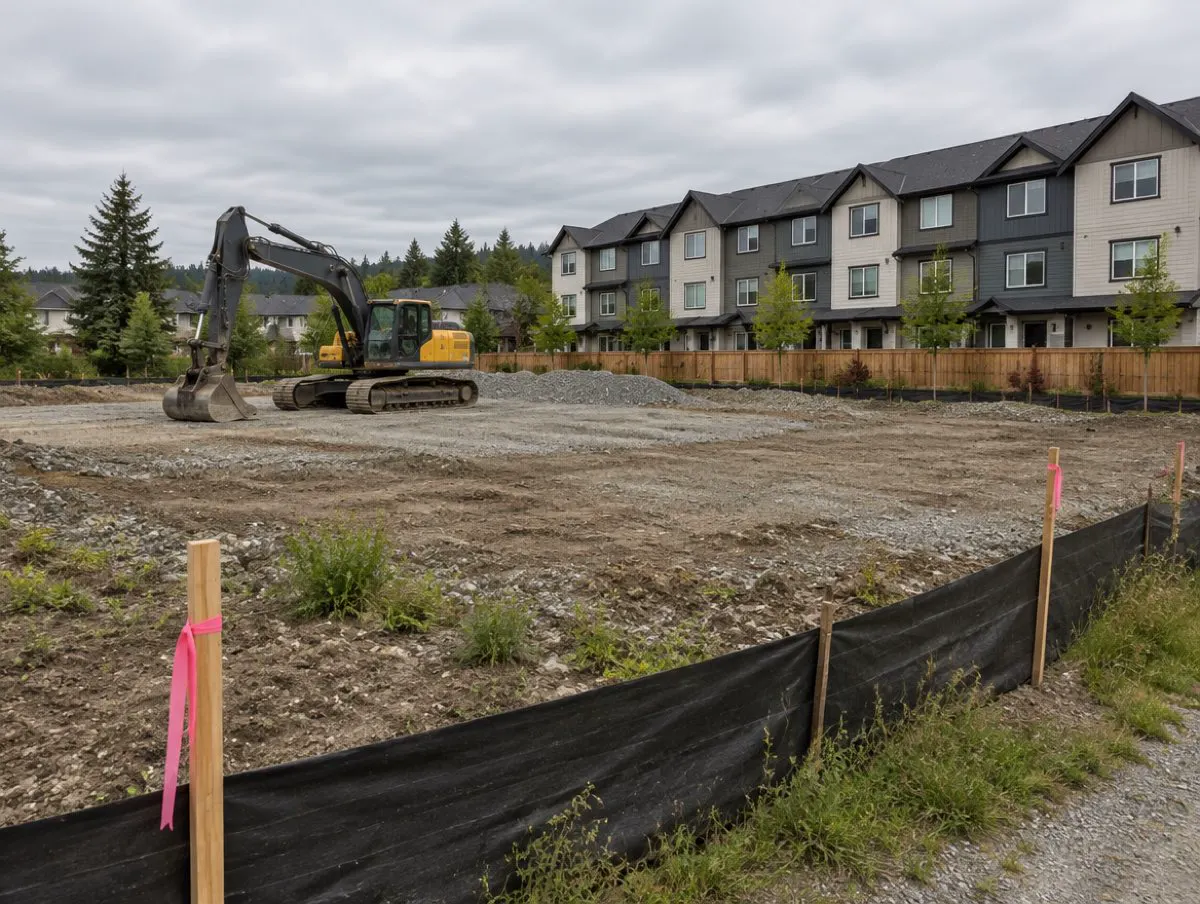
You are buying a lot to build on later, holding land until a permit is realistic, servicing raw land, or planning something larger than one house: a row of townhouses, a few lots subdivided from one, a small infill project.
Land earns nothing while you hold it, which is why fewer lenders do land loans and why the ones that do ask more questions. Lendrite arranges land and development loans with banks, credit unions and alternative and private lenders across BC, and goes through every cost with you upfront, before you commit, because on land the cost of the money is a large part of the budget. Book a 20-minute call →
What lenders look for in land
With no building and no rent, the lender is backing your plan and your equity. Expect to put in more of your own money than on a home purchase, and expect a shorter term, often with the whole loan due when construction financing or a sale replaces it.
- Zoning: what the lot allows today, and if you need a rezoning or a subdivision, how far along it is and what it will cost.
- Servicing: whether water, sewer, storm drainage, power and road access are at the lot line, and if not, who pays to bring them.
- A timeline: when the permit is expected, when construction starts, and when the land loan is paid out.
- The exit: a construction loan, a sale of serviced lots, or holding the land, and which lender takes it from there.
- You: what you have built or developed before, and what you own that sits behind the loan.
Farmland and acreage in the Agricultural Land Reserve is its own subject and lives on the agricultural page. Once the land is ready to build on, the build itself is covered on custom home build and multi-unit and fourplex.
Development budgets and pro formas
A budget says what the project will cost. A pro forma adds what it will earn: the sale prices or rents of the finished homes, set against every cost, to show the margin and how much of the lender's money is at risk if prices or timelines slip.
Lenders read the pro forma first and the budget second. They test it: what if the homes sell for less, what if the build takes longer, what if interest costs more. A pro forma that survives those questions on paper is the one that gets a serious reply.
A quantity surveyor is required on larger projects: an independent cost consultant who checks the budget and signs off on each draw (a stage payment released as the build reaches a milestone). Their fee is a soft cost, and it goes in the budget from the start. We prepare the pro forma on the lender's template with your builder's or surveyor's numbers, and we do not inflate the sale prices to make it fit.
Environmental questionnaires
An environmental questionnaire, if one is asked for, covers the land's past: fuel tanks, auto repair, dry cleaning, fill brought in from elsewhere, industrial neighbours, anything that could have left contamination in the soil.
Answer it plainly, and answer what you do not know with "unknown" rather than "no". Depending on the answers, the lender may ask for a Phase 1 environmental site assessment, which is a consultant's search of the records and a site visit, and only rarely for soil sampling after that. If one is likely, order it early: it sits on the critical path, and it is better to know before you own the land than after.
Phasing and takeout financing
A project beyond one lot is usually three or four loans in a row, each paid out by the next.
- 1
Land loan
Buys the land, or refinances land you already own to free up equity for the next stage. Short term, with the exit agreed on paper before it funds.
- 2
Servicing and development loan
Pays for the roads, utilities, subdivision and permits that turn raw land into buildable lots. Advanced in draws against the engineer's progress, much like a construction loan.
- 3
Construction loan, by phase
Builds the homes, often in phases so the sales of the first homes help carry the next. Each phase has its own budget, draws and inspections.
- 4
Takeout
The takeout is whatever pays out the construction loan at the end: the buyers' mortgages on sold homes, or a long-term rental mortgage if you hold. Lenders want to see the takeout before they advance the construction loan, so we line it up in the same conversation.
What to bring
The land items, on top of the usual income and ID documents.
- Title or the purchase contract for the land.
- Zoning confirmation, and any rezoning or subdivision application and where it stands.
- A servicing report or an engineer's letter on what is at the lot line.
- The development budget and pro forma, on the lender's template.
- Any environmental questionnaire or assessment already done.
- Your résumé as the developer, the corporate records, and a personal net worth statement.
- Your income and ID documents, listed on the document checklist.
On land and development loans private lenders cost more than banks. Costs are gone through with you upfront, before you commit to anything. The process from there to funding is on how it works.