

Owning the unit you work from
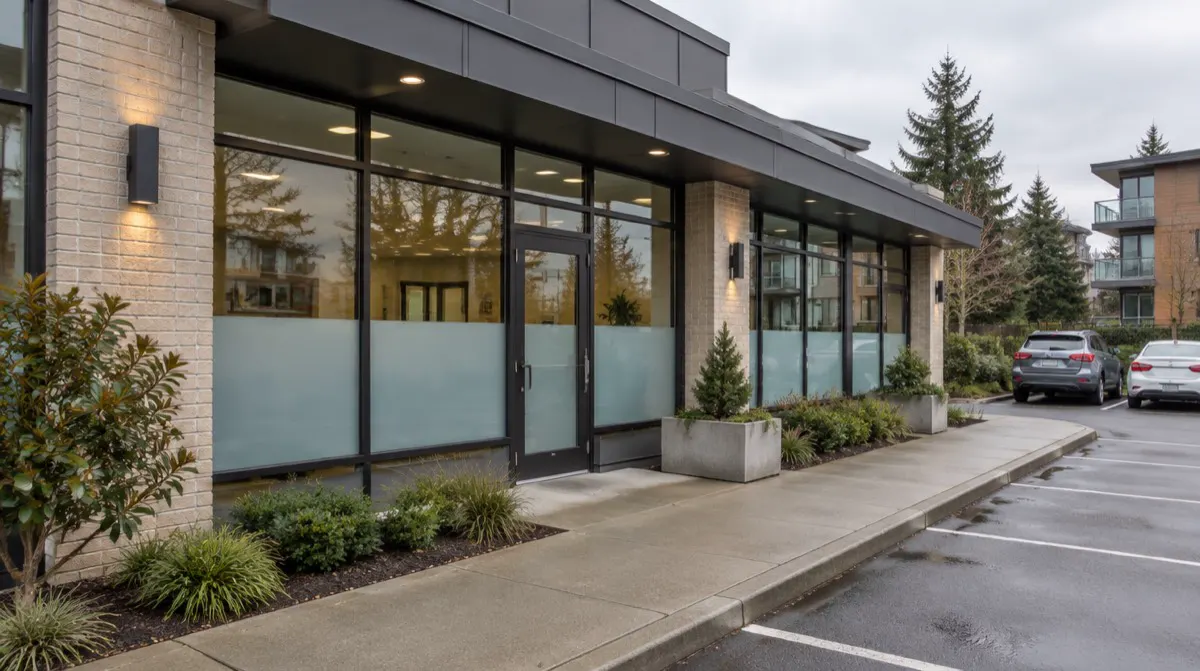
Owner-occupied commercial means your business is the tenant. A dental clinic buying its strata office, a shop buying the unit it has rented for years, a trades company buying a small industrial bay instead of paying someone else's mortgage. The business pays rent to the company that owns the unit, and that company pays the lender.
Lenders generally understand these purchases well. A business that has run from the same premises for years is a tenant they can read, and the owner has every reason to keep paying. The application is carried by the business's own financials rather than by rent from strangers.
Buying your premises
You find the unit, make an offer with a financing condition (a clause that lets you walk away if the mortgage is not approved), and we place the mortgage while that condition runs. The offer, your year-end financials and a personal net worth statement are enough to start. The appraisal and the lawyer come after the lender issues its commitment letter, the written approval that lists its conditions.
Refinancing premises you already own
If you own the unit outright or with an older mortgage, a refinance can replace that mortgage, take equity out for the business, or fold in an operating line. The lender looks at the same things as on a purchase, plus the current mortgage statement and the strata documents for the unit.
How the lender sizes the mortgage
Two things set the amount. The first is loan-to-value, or LTV: the mortgage as a share of what the unit is worth, taking the lower of the price and the appraised value. Commercial lenders lend a smaller share of the value than on a home, so the down payment is larger. The exact share depends on the lender and the property type, and we tell you the range before you write an offer.
The second is whether the business can carry the payments. The lender reads two years of year-end financials and asks whether the profit, after the owners are paid, covers the new mortgage with room to spare.
When a company buys the unit, the lender usually asks the owners to sign as guarantors as well. In plain words, the owners promise personally to stand behind the company's mortgage if the company cannot pay. It is standard on owner-occupied purchases, and we explain what it means for you before you sign anything.
Appraisal, reliance letter and lawyer
What each one is, in a sentence, and who pays for it.
The appraisal
A commercial appraiser values the unit from recent sales and what it would rent for. The lender has a list of approved appraisers and we choose one of them; you pay for the report, and the mortgage is sized on the lower of the price and the appraised value.
The reliance letter
If an appraisal or environmental report already exists, the firm that wrote it can issue a reliance letter: a short letter allowing your lender to rely on that report as if it had ordered it. It can save weeks and the cost of a second report.
The lawyer
A commercial lawyer checks the title and the strata documents, registers the mortgage and signs off on the company's records. Choose one early; the lender's instructions go to them once the conditions are met.
An operating line beside the mortgage
An operating line of credit is a revolving limit the business draws on for day-to-day cash: payroll before the invoices come in, stock before the season. Many owners arrange one at the same time as the premises, because the lender is already reading the same financials and can set both up together.
Some lenders want to hold both the mortgage and the business's accounts; some will place the mortgage and leave the line where it is. We show you both arrangements and what each costs. Business loans and credit lines explains operating lines, term loans and BDC programs in detail.
- 1
A short call
Tell us about the business, the unit and the timing. We say what is realistic, roughly what down payment the lender will want, and who on the team looks after your application.
- 2
Documents, then the application
We collect the documents first, then send the lender the application with a written summary of the business and the unit, not just a form.
- 3
Commitment letter
The lender's written approval, with its conditions: the appraisal, an environmental report if the lender asks for one, strata documents, insurance and the lawyer's work. We walk you through each one.
- 4
Clearing conditions
The lender has a list of approved appraisers and we choose one of them; we chase the strata documents and answer the lender's questions. You hear from us as each condition closes.
- 5
Lawyer and funding
The lender instructs your lawyer, you sign, and the money moves on the completion date. After that, a short yearly check-in on the mortgage and the business.
Documents for an owner-occupied purchase
Bring what you have to the first call and we chase the rest with you.
- Two years of year-end financial statements for the business
- Interim financial statements for the current year
- A personal net worth statement for each owner: what you own and what you owe, on one page
- The accepted offer, or the current lease if you are buying the unit you rent
- Corporate records: the certificate of incorporation and who the shareholders are
- Two pieces of ID for each owner, front and back
- On a refinance: the current mortgage statement and the strata documents
The full document checklist by client type, and how it works from the first call to funding.
Costs are gone through with you upfront, before you commit to anything; the appraisal, any environmental report and your lawyer are paid separately. Ready to talk it through? Book a 20-minute call →