

Land that is farmed, or could be
Agricultural financing covers farmland bought to farm, a hobby farm, an acreage with a house on it, and the barns, equipment and milk quota behind a working operation. Most of it in the Lower Mainland sits inside the Agricultural Land Reserve, which changes what a lender will do.
Lendrite arranges this financing with banks, credit unions and lenders that work mainly in farming. Some are comfortable with a house on a few acres and nothing else; some will only look at a working farm. The job is matching your property and your income to the lender that understands them.
Who this page is for: a family buying a blueberry farm in Abbotsford, a dairy expanding near Chilliwack, a vegetable grower in Delta adding land, a couple buying an acreage in Langley with a barn and a few horses, and anyone refinancing a rural property a bank has turned down.
ALR and rural zoning: what lenders accept
The Agricultural Land Reserve, or ALR, is the provincial zone where farming comes first. Land inside it is hard to subdivide, limits on non-farm use apply, and the rules on houses and second dwellings are set by the Agricultural Land Commission and the municipality together. A lender is lending against land it may one day have to sell, so those limits shape its decision.
Some lenders value the house and a set area of land around it and treat the rest of the acreage as if it were worth little. Others, usually credit unions and farm lenders, value the whole parcel and the operation on it. The gap between the two can be the gap between an approval and a decline, which is why we check the zoning, the ALR status and what the municipality permits before we choose a lender.
Rural properties bring their own conditions: a well water test, a septic inspection, confirmed road access, and any outbuildings shown on the appraisal. We list them for you at the start so none of them lands on you at the end.
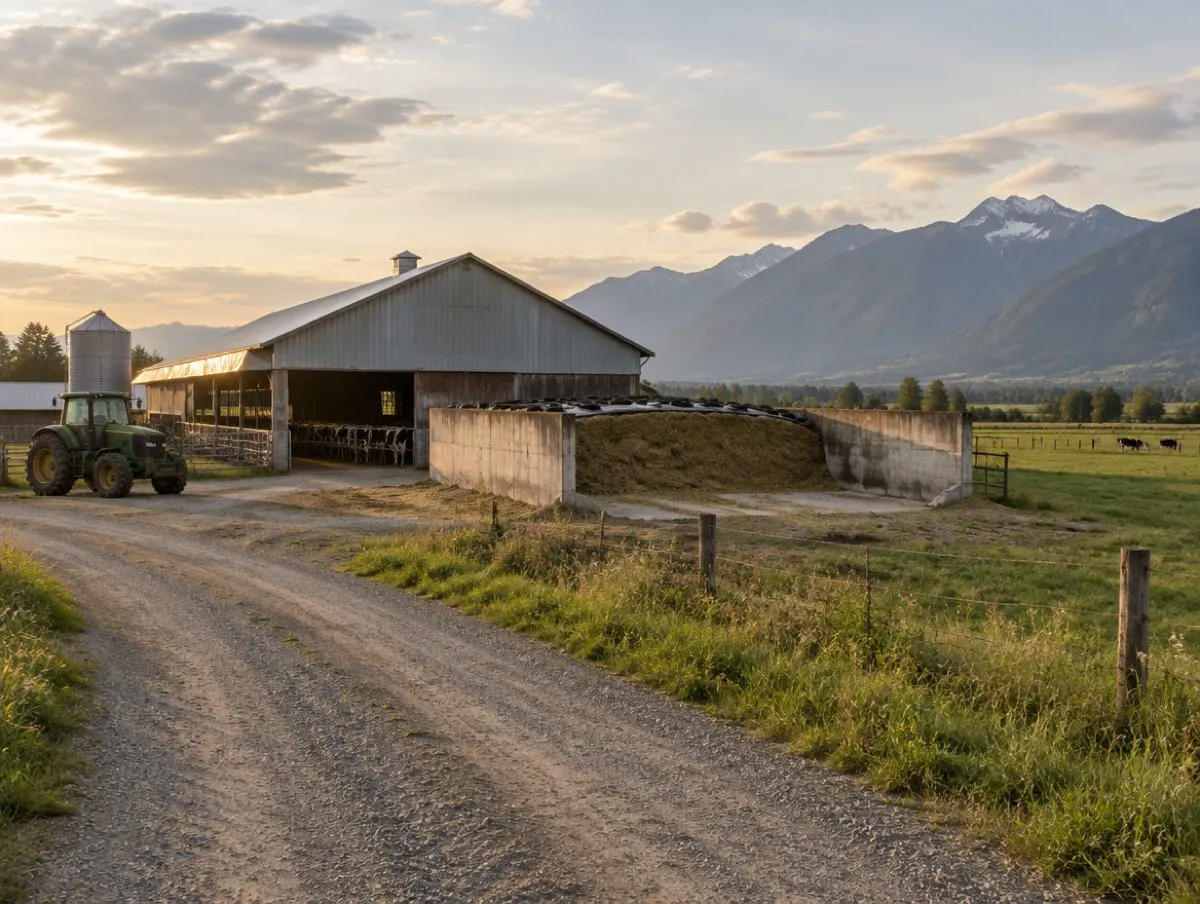
Blueberry, dairy and row-crop
Three kinds of farm, three different conversations with a lender.
Blueberry
Income arrives in one season and the year's costs come before it. Lenders want several years of packer statements (the processor's record of what it paid you), the age and variety of the plantings, and how the quiet months are carried. A line of credit is often arranged beside the land.
Dairy
A dairy is land, herd, barns, equipment and quota, and lenders look at all five. Quota is the licensed right to ship milk; it is often the operation's most valuable asset and is treated separately from the land. Expansions are sized on the milk cheques, not on the land alone.
Row-crop and vegetables
Potatoes in Delta, vegetables and berries across Surrey and Abbotsford. Lenders read crop history, contracts with buyers, leased land beside owned land, and equipment. Several seasons are averaged rather than one bad year judged on its own.
Farm income and agribusiness
Farm income does not look like a pay stub, and a lender that knows farming does not expect it to. It reads the farm's tax returns and financial statements over several years, averages the good seasons with the poor ones, and adds any off-farm income from a job or a second business. Depreciation on equipment and buildings is often added back, because it is a paper cost, not cash out the door.
Agribusiness is the step beyond the field: a packing line, a cold store, a farm store, processing or trucking. Those are financed as businesses, with term loans for the equipment and an operating line for the season. Business loans and credit lines covers them, and BDC programs are among the options.
An acreage with a home on it
If the farming is a hobby and the house is the point, the mortgage is closer to a residential one, with a few rural twists. The lender values the house and a limited area of land around it; extra acres, barns and a second dwelling may add little to the value it will lend against, so the down payment can be larger than on a city home.
A well, a septic field and a long driveway each bring a condition. If the property earns a little farm income, that helps the application but does not usually carry it; your own income still has to cover the payments. Where the acreage is serious farmland, we treat it as a farm purchase instead, and the lender changes with it. Buying a home covers the rest of the home-buying steps.
- 1
A short call
Tell us about the land, what is on it and how it earns. We check the ALR status and the zoning with you and say which kind of lender fits before any paperwork.
- 2
Documents, then the application
Farm returns, financial statements, the offer or the current mortgage, and a personal net worth statement. We send the lender a written summary of the operation, not just a form.
- 3
Commitment letter
The lender's written approval with its conditions: an appraisal by an appraiser who values farmland, water and septic reports, insurance, and the lawyer's work.
- 4
Clearing conditions
Reports are ordered, the lender's questions are answered, and you hear from us as each condition closes.
- 5
Lawyer and funding
The lender instructs your lawyer, you sign, and the money moves on the completion date. After that, a short yearly check-in, timed around your season.
Documents for a farm or acreage
Bring what you have to the first call and we chase the rest with you.
- Two years of tax returns with the farm statements, or company financials if incorporated
- Interim statements for the current season
- Packer, processor or buyer statements showing what was shipped and paid
- A personal net worth statement for each owner
- The accepted offer, or the current mortgage statement on a refinance
- Title, ALR status and the municipality's zoning confirmation, if you have them
- Equipment and quota schedules, where they apply
- Two pieces of ID for each owner, front and back
The full document checklist by client type, and how it works from the first call to funding.
Costs are gone through with you upfront, before you commit to anything; the appraisal, any water or septic report and your lawyer are paid separately. Book a 20-minute call →